


AYURVEDIC HAIR TOOL
KANSA COMB
KANSA COMB
A traditional Kansa comb, rooted in Ayurvedic practices, is designed to support scalp health and mindful care. Used during oiling rituals, this Ayurvedic scalp massage tool transforms daily hair care into a grounding, intentional experience.
Gentle scalp stimulation to support circulation.
Releases built-up scalp tension.
Helps evenly distribute hair oils.
Supports the scalp’s natural balance.
Couldn't load pickup availability
 HAND MADE
 AUTHENTIC KANSA COMB


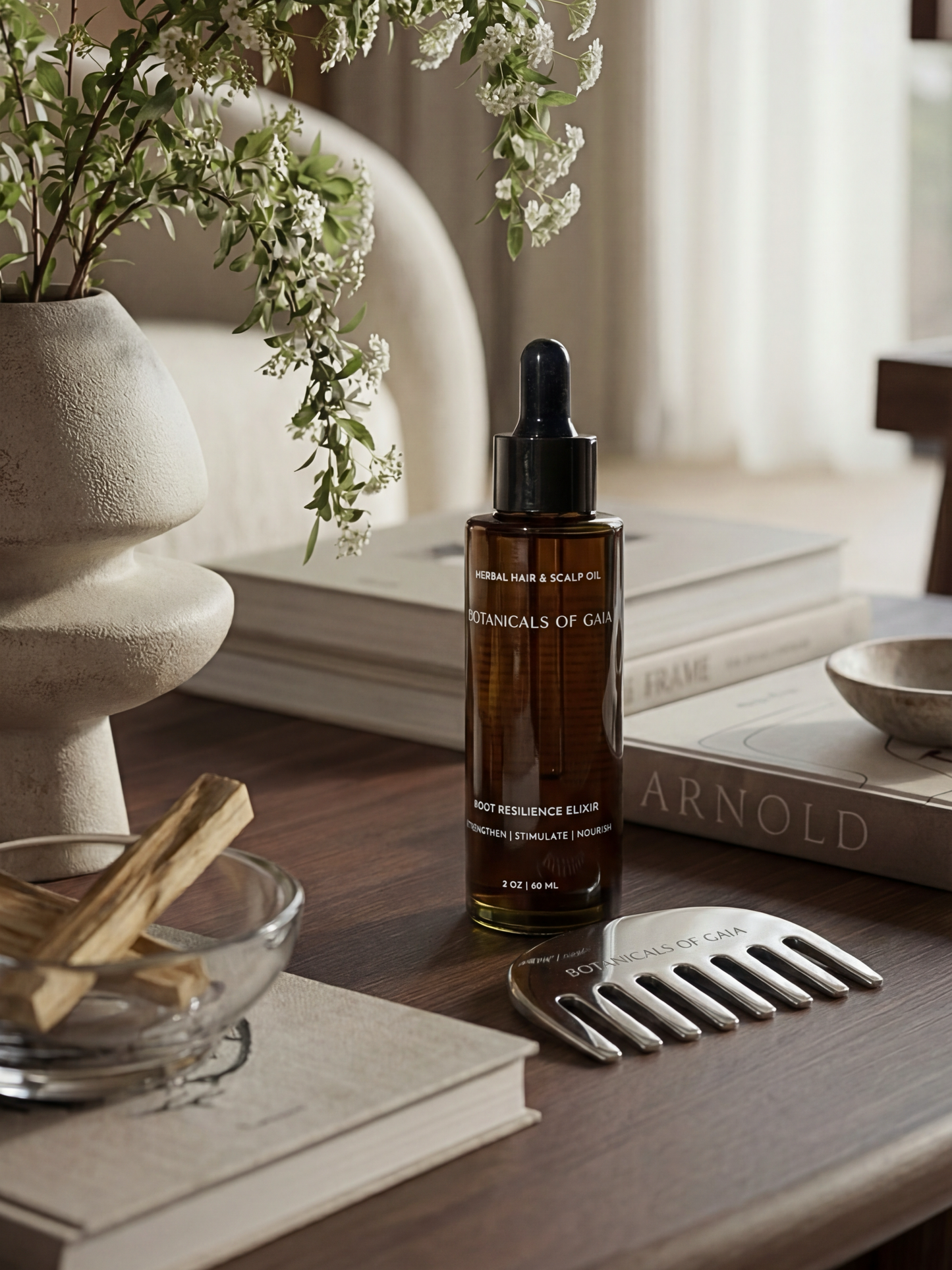
COMPLETE THE RITUAL

ROOT RESILIENCE ELIXIR
In Ayurvedic tradition, beauty is often viewed as a reflection of balance and mindful care. The Kansa Comb is crafted from Kansa, an ancient, sacred bronze alloy of copper and tin that has long been used in Ayurvedic wellness tools. When gently glided across the scalp, the comb transforms a simple routine into a grounding ritual that supports both scalp care and relaxation.
Stimulates the scalp through gentle massage
Scalp massage has long been valued in Ayurvedic hair rituals for its ability to help stimulate the scalp and support healthy circulation. The Kansa comb encourages slow, intentional movement across the scalp, helping to refresh the skin and support an environment that promotes healthy-looking hair.
Supports the scalp’s natural balance
Kansa is traditionally associated with balancing properties in Ayurvedic practices. Regular use of a Kansa comb may help support the scalp’s natural pH and oil balance, contributing to a more comfortable and nourished scalp environment.
Encourages relaxation and relieves scalp tension
Beyond hair care, Ayurvedic rituals often emphasize moments of pause and restoration. The rhythmic motion of the comb across the scalp can help release built-up tension while transforming everyday hair care into a calming ritual of self-care.
Gently stimulates marma points
In Ayurveda, marma points are considered vital energy points throughout the body. The scalp contains several of these points, and gentle stimulation during massage is traditionally believed to help support overall balance and wellbeing.
Enhances the scalp oiling ritual
When paired with a botanical scalp oil, the Kansa comb helps distribute oils more evenly while deepening the experience of scalp massage. This practice encourages mindful application and leaves the scalp feeling refreshed, nourished, and revitalized.
The Kansa comb is best used as part of a mindful scalp care ritual. In traditional Ayurvedic practice, gentle and consistent scalp massage is valued for supporting scalp health and creating a moment of relaxation within daily routines.
Begin with dry hair or apply scalp oil
The comb can be used on dry hair, but it is often incorporated into a scalp oiling ritual. Apply scalp oil and gently distribute it across the scalp using your fingertips before combing.
Section the hair
Part the hair into sections to allow the comb to reach the scalp more easily. Working in sections helps ensure the massage is focused on the scalp rather than just the hair.
Use slow, gentle strokes
Place the comb against the scalp and glide it slowly across the scalp using light to moderate pressure. Move from the front hairline toward the crown and nape, following the natural contour of the head.
Focus on key scalp areas
Spend a little extra time massaging areas where tension commonly builds, such as the temples, crown, and base of the skull. Gentle, repetitive strokes help stimulate the scalp while encouraging relaxation.
Continue for 5 minutes
Allow the movement to remain slow and rhythmic. This helps transform the practice into a calming ritual while encouraging circulation and scalp stimulation.
Proper care will help preserve the beauty and longevity of your Kansa comb.
Clean after each use
After use, gently wipe the comb with a soft, slightly damp cloth to remove any oil or residue from the surface.
Dry thoroughly
Always dry the comb immediately after cleaning to prevent moisture from affecting the metal or handle.
Avoid soaking in water
Do not submerge the comb in water or leave it in damp environments, as this may affect the integrity of the metal and craftsmanship.
Store in a dry place
Keep the comb in a clean, dry location when not in use to maintain its quality over time.
Natural patina may develop
Because Kansa is a traditional copper and tin alloy, the metal may naturally develop a subtle patina over time. This is normal and does not affect the function of the comb.
Handmade by artisans from Rajasthan, India.
Crafted from authentic Kansa, a traditional Ayurvedic bronze alloy made of 80% copper and 20% tin.
Answers to help you use the Kansa comb with confidence
FREQUENTLY ASKED QUESTIONS
What are the benefits of using a Kansa comb?
The Kansa comb helps support a relaxing scalp massage ritual that may leave the scalp feeling refreshed and invigorated. It is often used to promote a healthy-looking scalp environment, encourage relaxation, and elevate your oiling routine.
How do I use the Kansa comb?
Apply your scalp oil or serum if desired, then gently massage the scalp with the Kansa comb using light to medium pressure. Glide across the scalp in slow, steady motions for several minutes. It can be used as part of your regular scalp ritual on dry hair or with oil.
How do I clean and care for my Kansa comb?
After each use, wipe the comb with a soft, slightly damp cloth to remove oil or buildup. Dry it thoroughly right away and store it in a clean, dry place. Avoid soaking it in water or using harsh cleansers, as this helps preserve the quality of the comb and its metal surface.
Is the Kansa comb safe for a sensitive scalp?
The comb is designed for gentle scalp massage, but if you have a very sensitive, irritated, or broken scalp, use very light pressure and discontinue use if discomfort occurs.
Will the metal change color over time?
Because Kansa is a traditional metal blend, some natural discoloration can happen over time depending on oils, moisture, and frequency of use. This is normal and does not affect the function of the comb.